
Artificial Intelligence has moved beyond a corporate strategy conversation.
It has become a national one.
Governments across the world are no longer just asking how AI will change their economies. They are asking a more uncomfortable question.
"Who controls the infrastructure our AI future depends on?"
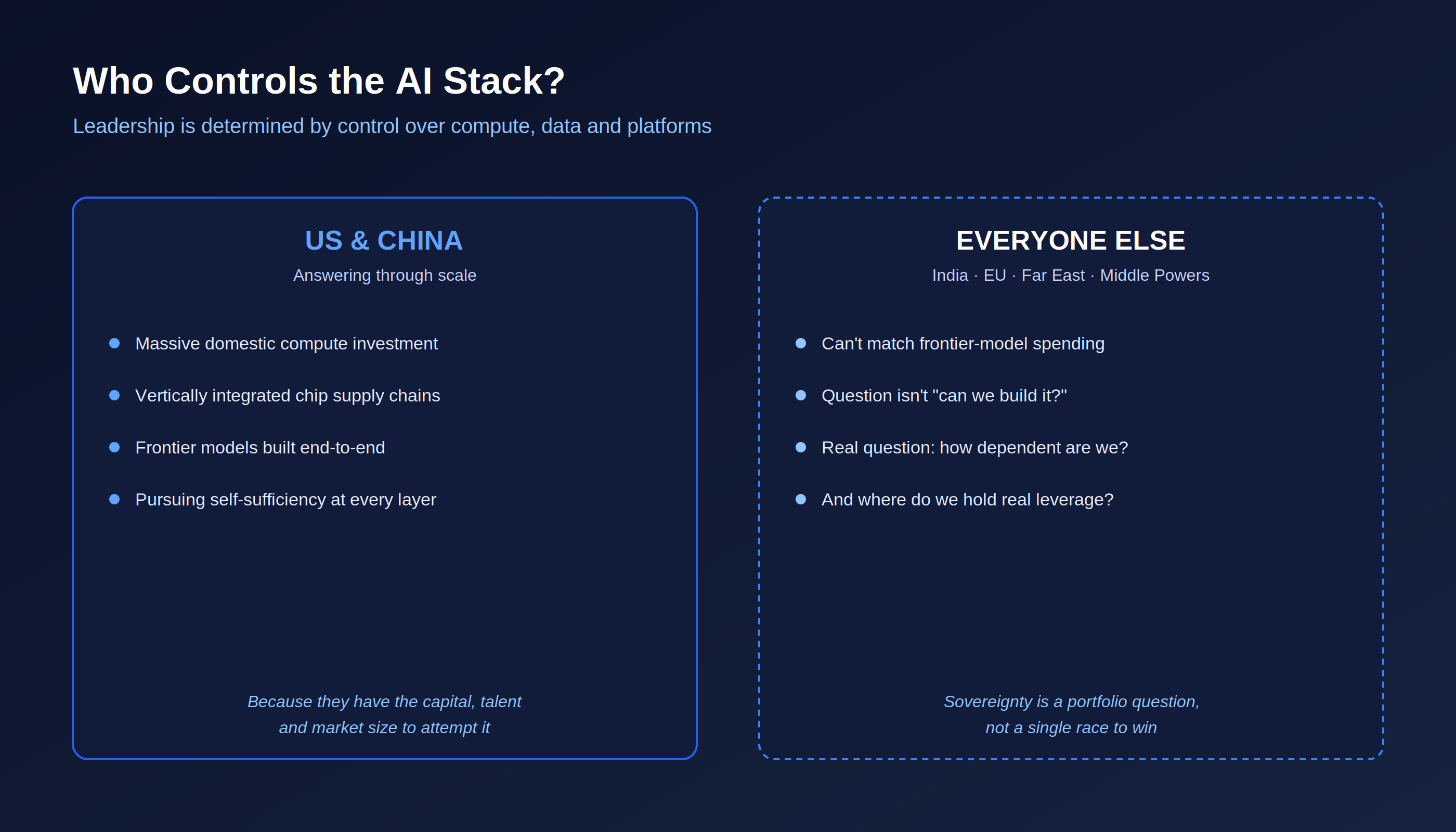
Figure 1. AI leadership is increasingly determined by control over compute, data and platforms — not just model capability.
For the two largest players — the United States and China — this question is being answered through scale. Massive compute investment, vertically integrated chip supply chains, and frontier models built and controlled end-to-end. Both are pursuing self-sufficiency across nearly every layer of the stack, from chip design to model training to application deployment — because both have the capital, talent base and domestic market size to attempt it.
Almost no other country does.
For everyone else — India, the European Union, the advanced economies of the Far East, and most of what are often called "middle powers" — the question is different, and considerably harder.
It isn't "can we build a frontier model?"
It's "how dependent are we on someone else's — and where, if anywhere, do we hold real leverage?"
This isn't primarily a technology problem.
It's a sovereignty problem.
Why the AI Race Looks Different for Middle Powers
When the conversation is framed as a race — who reaches artificial general intelligence first, whose model tops the benchmark — middle powers are structurally positioned to lose it.
They don't have the compute base of the US. They don't have the vertically integrated manufacturing base of China. Matching frontier-model spending isn't a realistic near-term strategy for most economies, India and the EU included.
But this framing misses what actually matters for a country's economic and strategic position.
The countries that will be most exposed over the next decade aren't the ones without a homegrown frontier model.
They're the ones who are structurally dependent on someone else's infrastructure, with no leverage if access changes.
Not every middle power is exposed in the same way, though. Some hold real leverage in specific parts of the stack, even without a frontier model of their own — which is worth examining before assuming "middle power" means "dependent by default."
That dependency shows up in layers — and each layer carries a different kind of risk.
Four Layers of AI Dependency
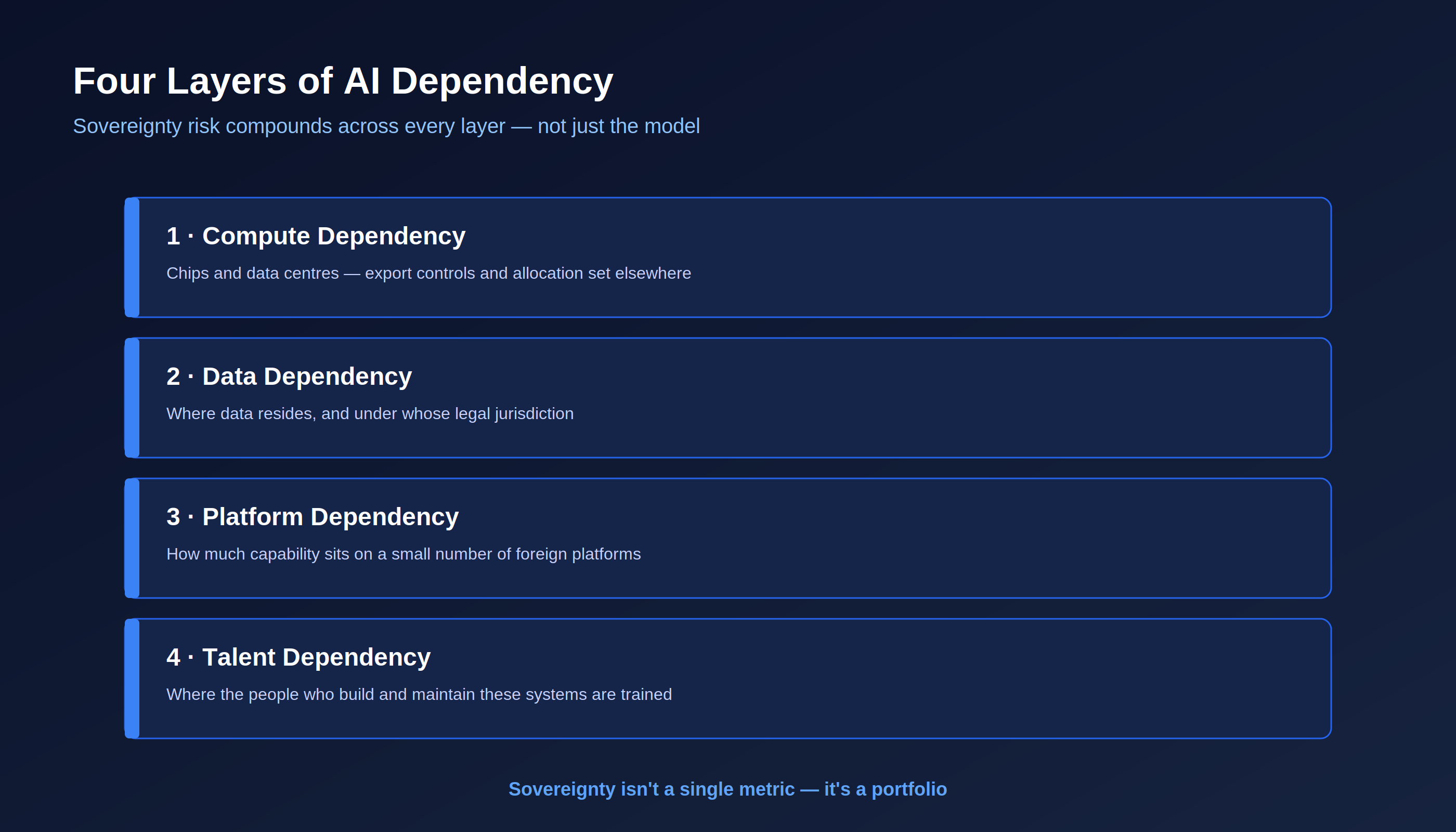
Figure 2. Sovereignty risk compounds across compute, data, platforms and talent — not just at the model layer.
1. Compute Dependency
Who owns and controls the chips and data centres your economy runs on?
Export controls, allocation priorities, and pricing decisions made in another jurisdiction can directly affect your domestic AI capacity — regardless of your own policy choices.
2. Data Dependency
Where does your citizens' and enterprises' data actually reside, and under whose legal jurisdiction?
Cloud contracts and data localisation rules only address part of this. Cross-border data flows, subpoena exposure, and foreign legal reach into supposedly "local" infrastructure remain live questions for most middle powers.
3. Platform Dependency
How much of your economy's AI capability sits on top of a small number of foreign platforms?
This mirrors the cloud dependency conversation of the last decade — except the switching costs and lock-in are potentially much higher with foundation models and the ecosystems built around them.
4. Talent Dependency
Where is the talent that builds and maintains these systems being trained, and where does it choose to work?
Talent flows are harder to regulate than infrastructure, but arguably matter just as much over a ten-year horizon.
A country can score well on one layer and poorly on the others. Sovereignty isn't a single metric — it's a portfolio.
Sovereignty Doesn't Mean Self-Sufficiency
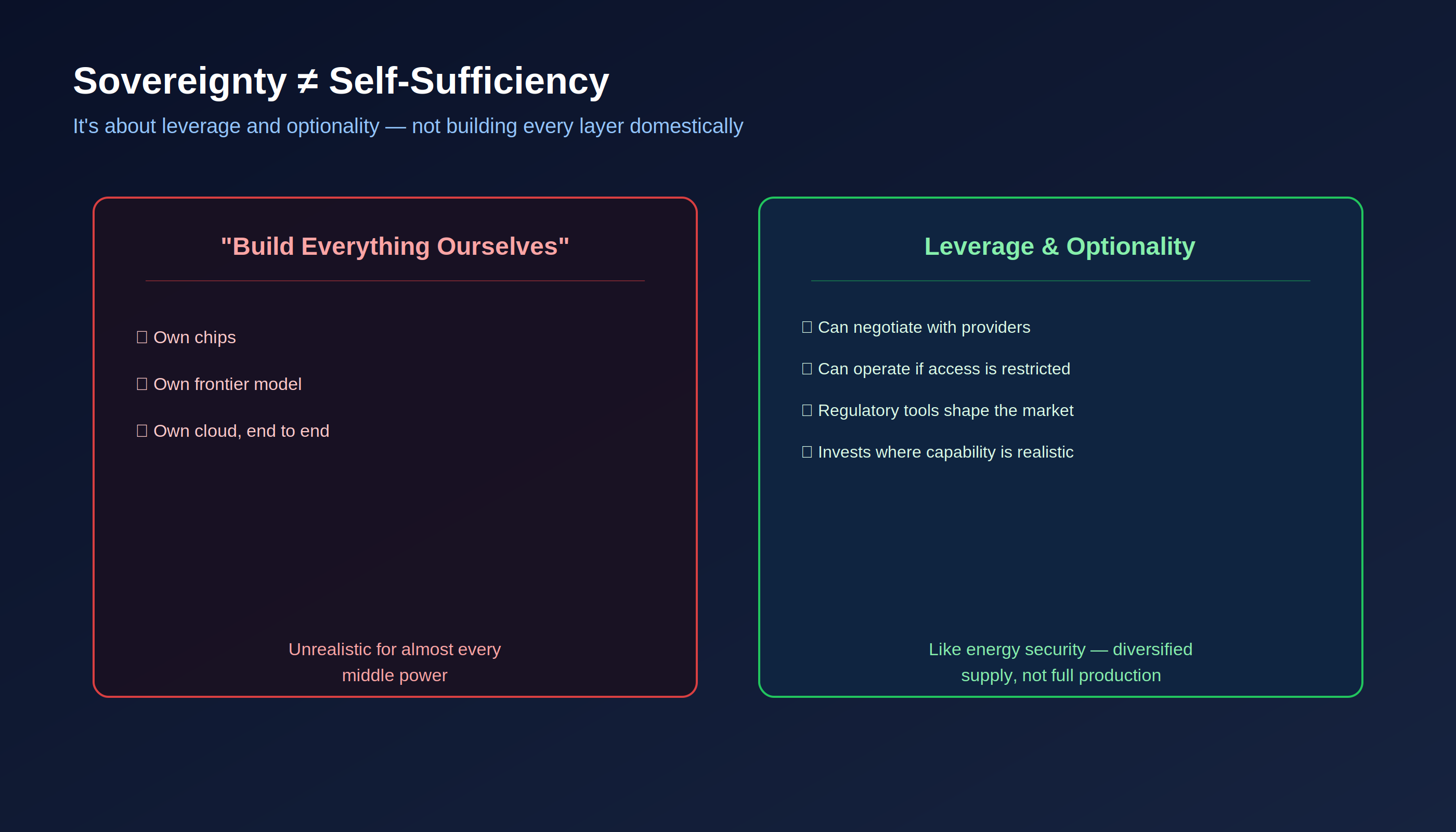
Figure 3. AI sovereignty is about leverage and optionality — not building every layer domestically.
A common misconception — in both directions — is that "AI sovereignty" means building a fully domestic AI stack: your own chips, your own frontier model, your own cloud.
For almost every middle power, that's neither realistic nor the right goal.
Sovereignty is better understood as leverage and optionality, not self-sufficiency:
- Can you negotiate meaningfully with your infrastructure providers, or are you a price-taker?
- Can you continue operating critical systems if access to a foreign platform is restricted or degraded?
- Do you have regulatory tools that shape how AI operates in your market, rather than simply accepting terms set elsewhere?
- Are you investing in the layers where domestic capability is achievable — data governance, talent, applied research — rather than chasing the layers where it isn't?
This is closer to how countries have historically approached energy security. Very few nations are fully energy self-sufficient. The ones with real security are the ones with diversified supply, strategic reserves, and negotiating leverage — not the ones who tried to produce every barrel domestically.
The Far East: Leverage Without a Frontier Model
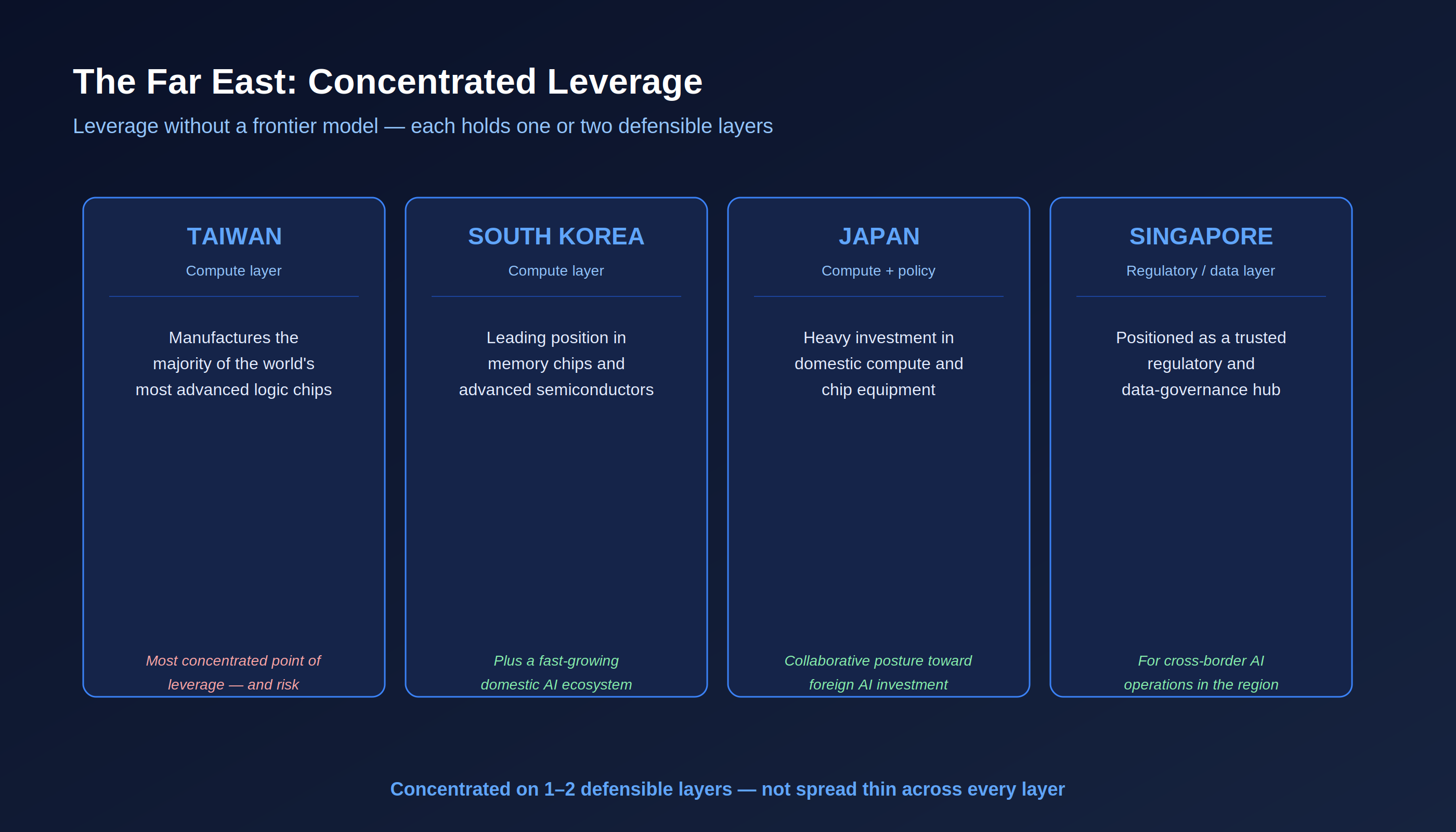
Figure 3b. Taiwan, South Korea, Japan and Singapore each hold concentrated leverage in specific layers of the AI stack — without competing at the frontier-model layer itself.
The Far East's advanced economies complicate the "US, China, and everyone else" framing, because several of them hold outsized leverage in specific layers of the stack, despite not competing directly at the frontier-model layer:
- Taiwan manufactures the overwhelming majority of the world's most advanced logic chips. This is arguably the single most concentrated point of leverage — and vulnerability — in the entire global AI supply chain, independent of any model or platform.
- South Korea holds a comparable position in memory chips and advanced semiconductor manufacturing, alongside a fast-growing domestic AI application ecosystem.
- Japan is investing heavily in domestic compute capacity and chip equipment, and has taken a notably collaborative regulatory posture aimed at attracting foreign AI infrastructure investment rather than restricting it.
- Singapore has positioned itself less as a manufacturing or model hub and more as a regulatory and data-governance hub — a trusted jurisdiction for cross-border AI operations in the region.
None of these countries are trying to out-build OpenAI or a Chinese frontier lab. Instead, each has concentrated on the one or two layers where they can hold genuine, defensible leverage — compute manufacturing, specialised hardware, or regulatory trust — rather than spreading thin across every layer at once.
That's arguably a more instructive model for other middle powers than either the US or Chinese approach.
What India and Europe Are Already Doing
India and the EU have taken visible, though quite different, steps of their own — worth noting factually, without judging which approach is "right":
- India has moved on domestic compute capacity and skilling through initiatives like the IndiaAI Mission, alongside continued growth in data centre investment from global players building local capacity.
- The EU has taken a regulatory-first approach, most visibly through the EU AI Act, aiming to shape how AI operates within its market even where it doesn't control the underlying frontier models.
Neither approach solves the dependency question outright. Compute investment addresses one layer; regulation addresses a different one. The interesting strategic question for India, the EU, and other middle powers watching the Far East's more concentrated bets, is whether their own efforts add up to real leverage in a specific layer — or remain broad, siloed initiatives that don't compound into strategic optionality anywhere.
The Executive and Policy Checklist
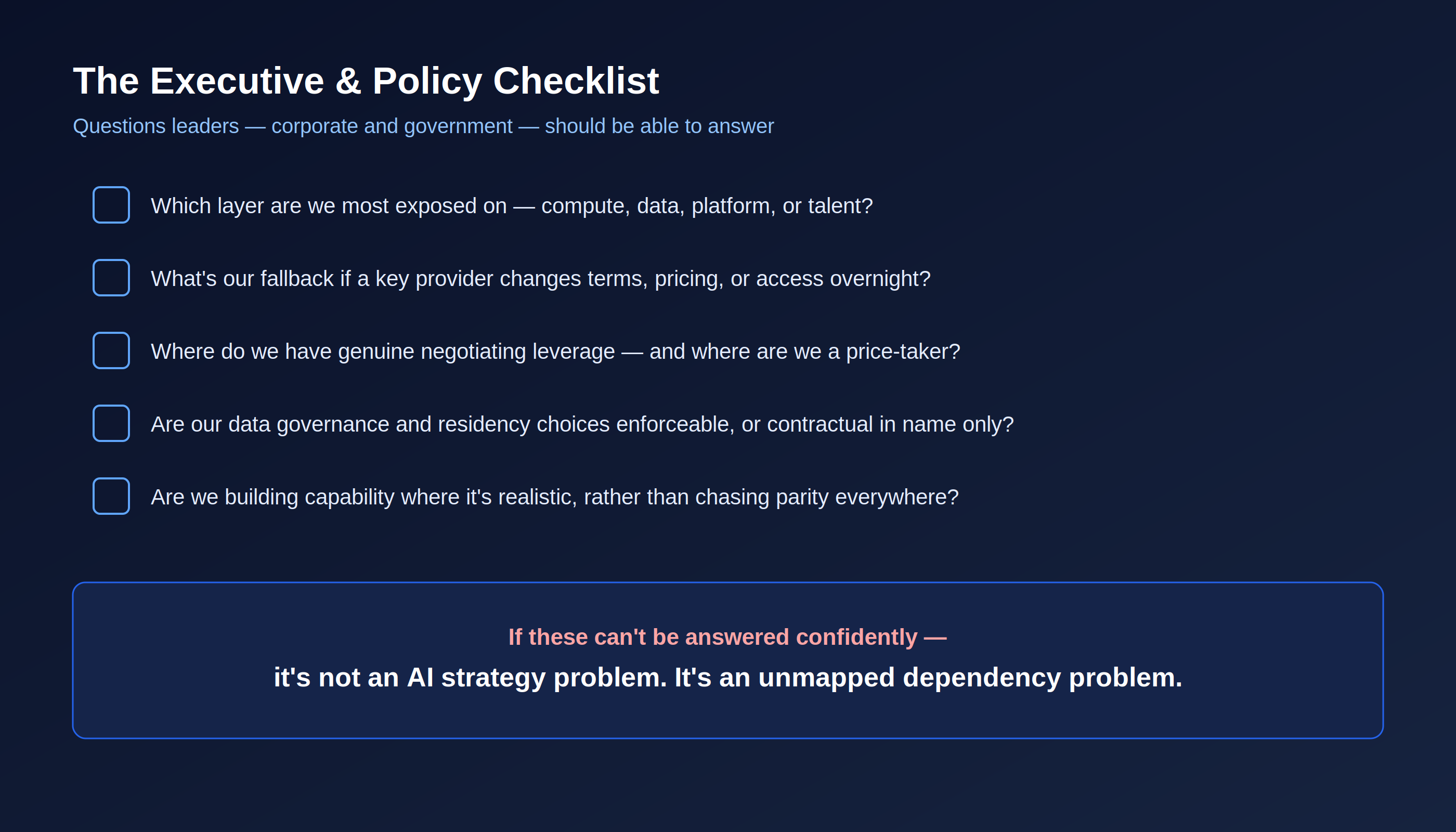
Figure 4. Before claiming AI readiness, leaders — corporate and government — should be able to answer these questions.
Whether you're a CIO or a policymaker, the questions worth asking are similar:
- Which layer are we most exposed on — compute, data, platform, or talent?
- What's our fallback if a key AI provider changes terms, pricing, or access overnight?
- Where do we have genuine negotiating leverage, and where are we a price-taker?
- Are our data governance and residency choices actually enforceable, or contractual in name only?
- Are we building capability where it's realistic to build it, rather than chasing parity everywhere?
If these can't be answered with confidence, the organisation — or the country — doesn't have an AI strategy problem.
It has a dependency problem it hasn't mapped yet.
Final Thought
The AI race narrative — who gets to AGI first, whose model wins the benchmark — makes for compelling headlines.
But for most of the world — including major economies like India, the countries of the EU, and the advanced economies of the Far East — it's the wrong question to organise strategy around.
The more useful question is quieter, and considerably more actionable:
Where are we dependent, where do we hold real leverage, and what does the gap between the two cost us if circumstances change?
Countries — like enterprises — rarely lose ground because they lacked the biggest model.
They lose ground because they never mapped their dependencies and their leverage until the moment both were tested.
About the Author
Arindam Banerjee is a technology executive with more than 21 years of experience leading enterprise technology transformation, AI strategy, digital transformation and large-scale delivery across global organisations.
His experience spans enterprise architecture, programme delivery, AI operating models and executive technology leadership across banking, manufacturing, consumer products and digital businesses.
If you're exploring how AI strategy, infrastructure dependency and governance intersect for your organisation or market, I'd be delighted to connect and exchange ideas.
Where is your organisation — or your country — most exposed when it comes to AI dependency: compute, data, platforms, or talent? And where, if anywhere, do you hold real leverage?