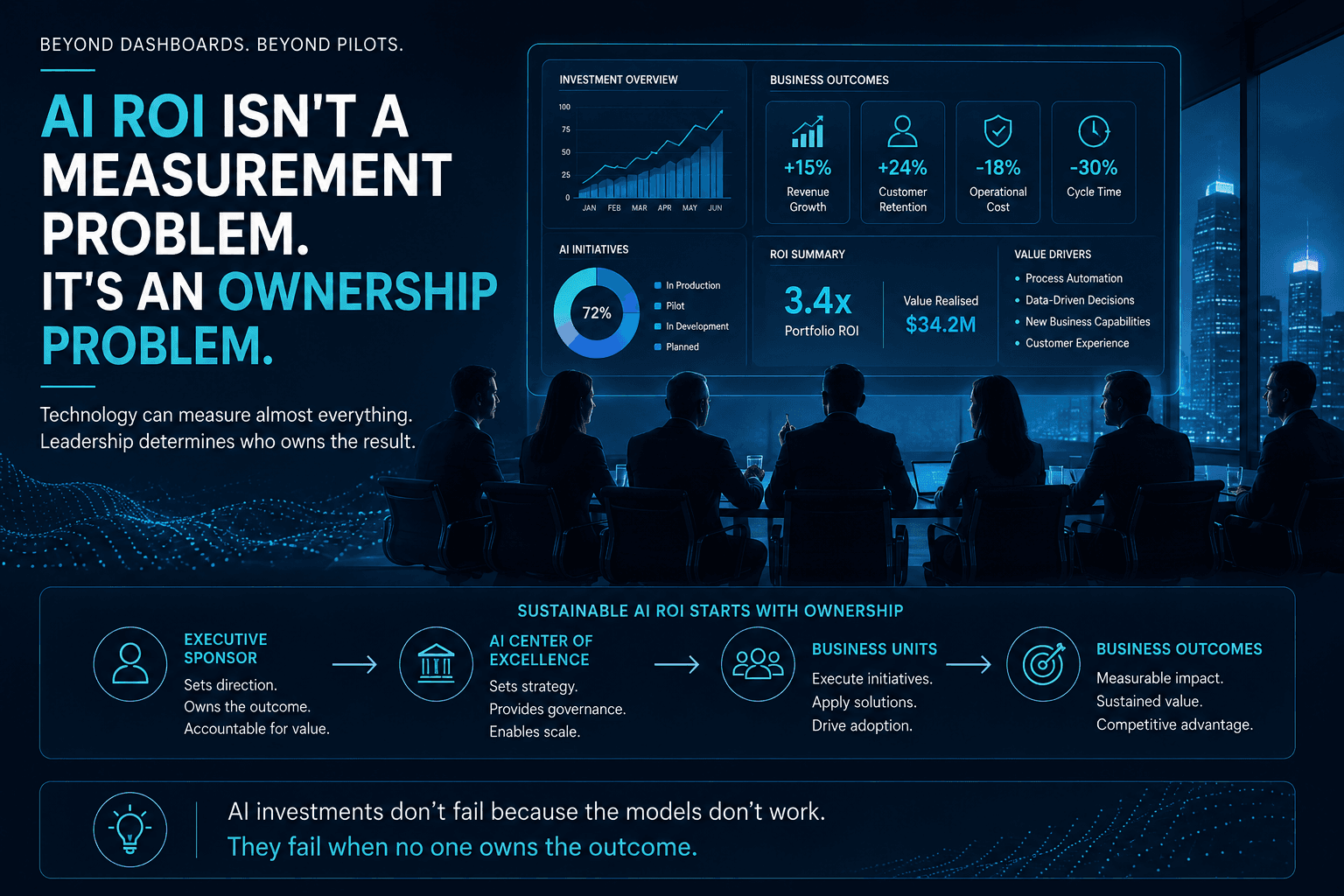
Artificial Intelligence has moved well beyond experimentation.
Across industries, organisations are investing heavily in AI platforms, copilots, intelligent automation and data-driven decision making. As these initiatives mature, executive conversations are gradually shifting away from whether to invest in AI and towards a more fundamental question.
"How do we know our AI investment is actually creating business value?"
Artificial Intelligence has moved well beyond experimentation.
Across industries, organisations are investing heavily in AI platforms, copilots, intelligent automation and data-driven decision making. As these initiatives mature, executive conversations are gradually shifting away from whether to invest in AI and towards a more fundamental question.
"How do we know our AI investment is actually creating business value?"
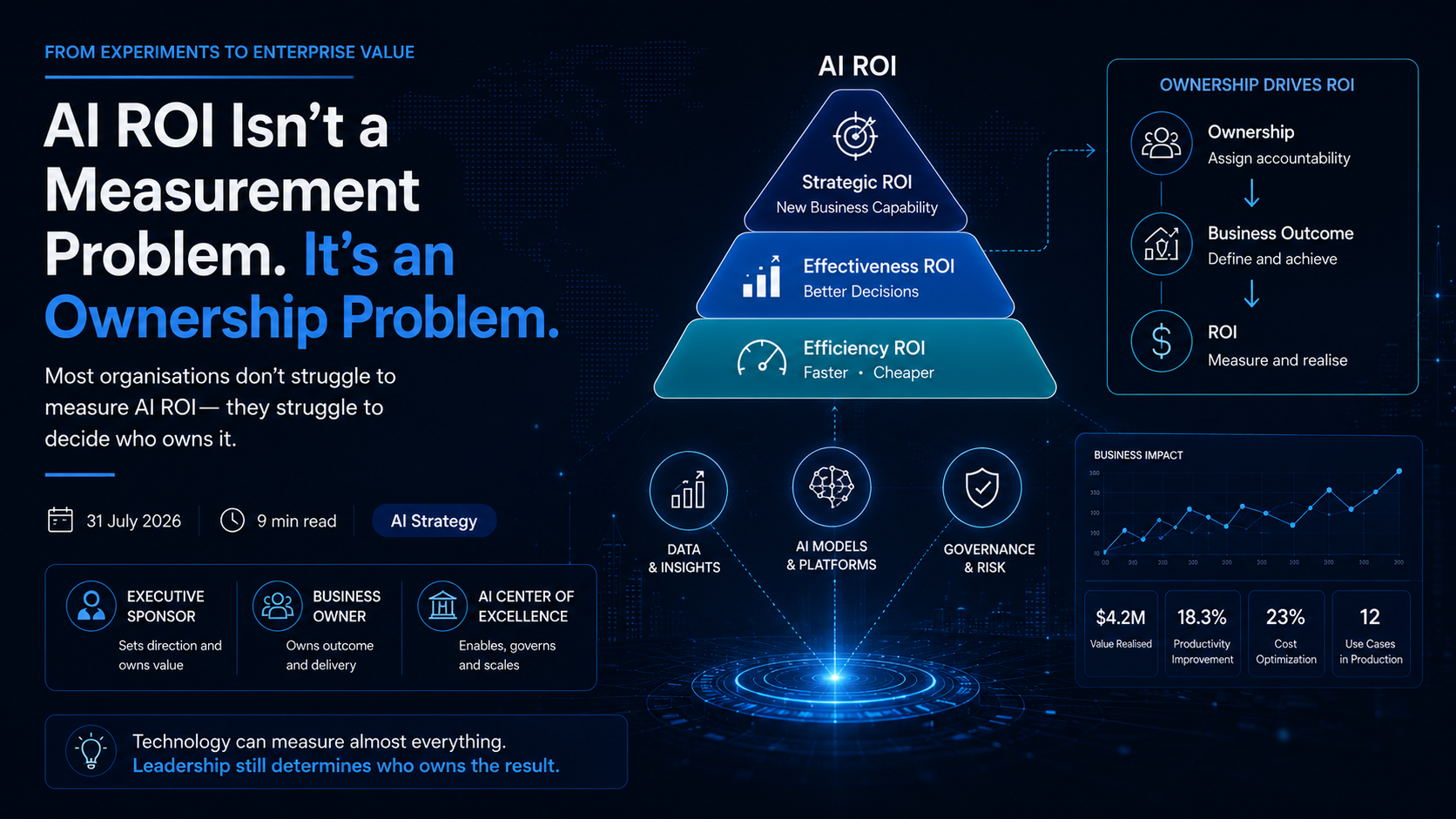
Figure 1. Sustainable AI ROI is created through executive ownership, governance and measurable business outcomes.
At first glance, this appears to be a question about measurement.
In practice, it is usually a question about ownership.
In my previous article, I explored why many AI Centers of Excellence struggle to deliver lasting business value. One of the recurring themes was accountability. That same theme reappears once organisations begin asking whether their AI investments are actually delivering meaningful returns.
Technology teams report platform adoption.
Data scientists highlight model accuracy.
Business units celebrate successful pilots.
Everyone contributes part of the picture.
Very few people own the outcome.
This isn't primarily a measurement problem.
It's an accountability problem.
Why Traditional AI ROI Metrics Fall Short
When organisations attempt to justify AI investment, three familiar measures usually dominate the discussion.
- Cost savings
- Productivity improvements
- Innovation
Each of these metrics has value.
None of them, however, answers the question executives ultimately care about.
Was the investment worthwhile?
The challenge is not that these measures are difficult to calculate.
The challenge is that they are often disconnected from individual accountability.
A projected cost saving may quietly change over time without anyone being responsible for whether it was ever realised.
A productivity improvement may be attributed to AI despite being driven by broader operational improvements.
Without ownership, metrics become indicators rather than evidence.
Measurement without accountability quickly becomes storytelling supported by spreadsheets.
A Three-Layer Framework for AI ROI
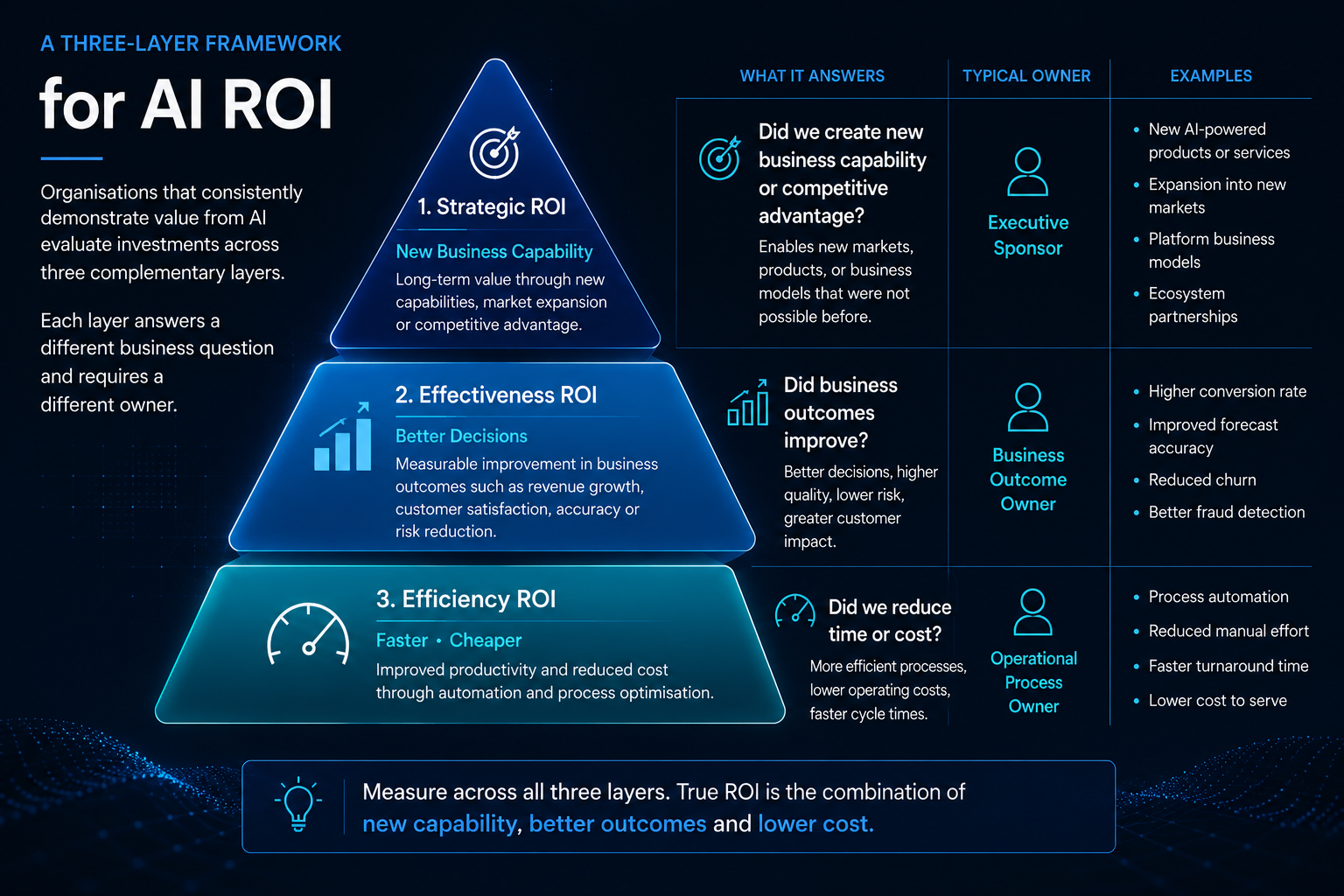
Figure 2. AI investments should be evaluated across efficiency, effectiveness and strategic value.
The organisations that consistently demonstrate value from Artificial Intelligence rarely rely on a single ROI measure.
Instead, they evaluate AI investments across three complementary layers.
Each layer answers a different business question and requires a different executive owner.
1. Efficiency ROI
Measures operational improvements such as:
- Reduced manual effort
- Lower operating costs
- Faster customer response times
- Shorter processing cycles
The key question is:
Has AI made this process measurably faster or more cost-effective?
2. Effectiveness ROI
Focuses on whether AI improves business outcomes.
Examples include:
- Better sales forecasting
- Improved fraud detection
- Higher customer retention
- More accurate demand planning
The key question becomes:
Are business decisions measurably better because of AI?
3. Strategic ROI
Measures capabilities that previously did not exist.
Examples include:
- Entering new markets
- Launching AI-enabled products
- Faster response to competitive change
- Sustainable competitive advantage
These are ultimately leadership decisions rather than technology decisions.
Why Dashboards Don't Answer the Board's Question
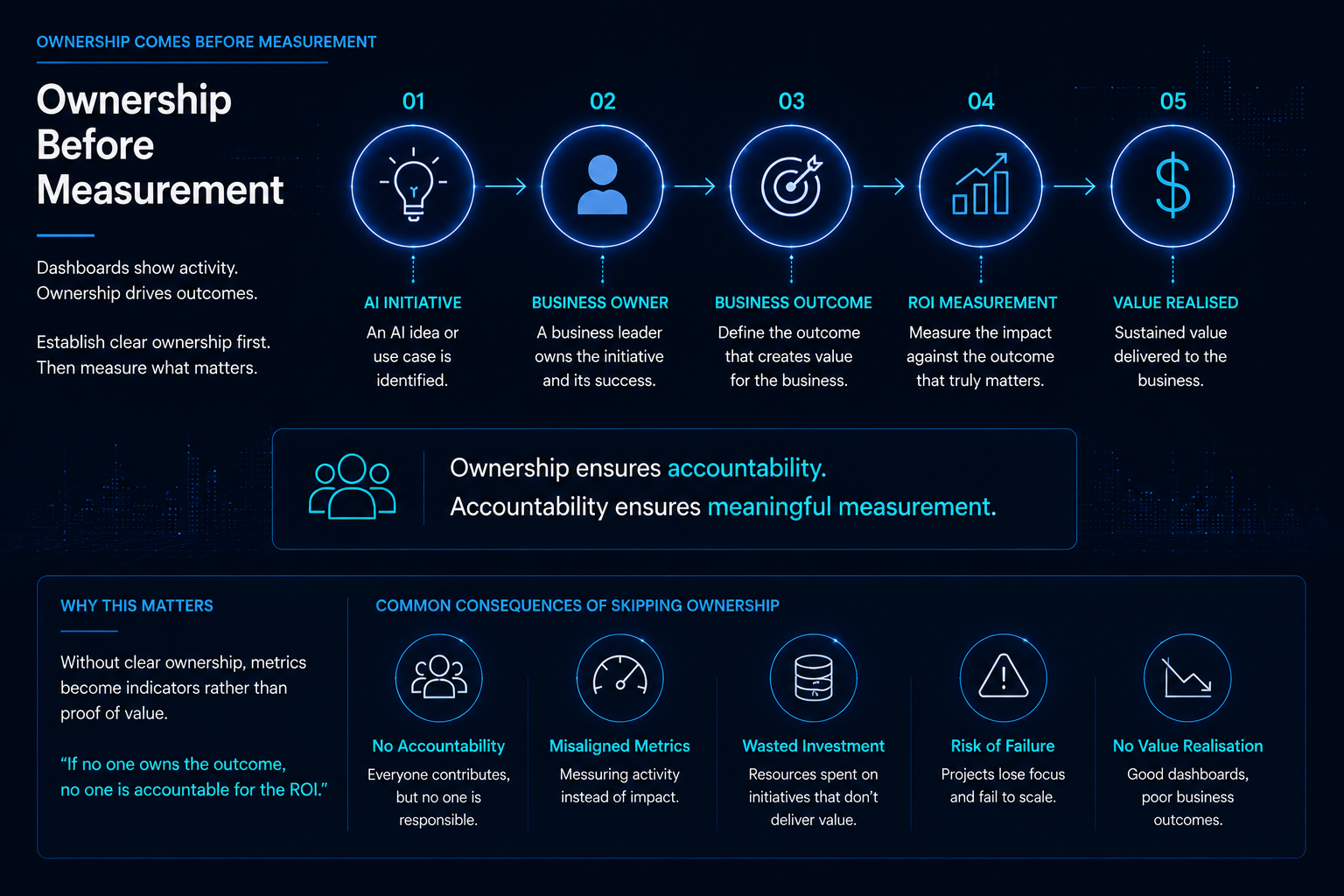
Figure 3. Ownership establishes accountability, which in turn makes meaningful ROI measurement possible.
Many organisations invest significant effort building AI dashboards.
They measure:
- Adoption
- Usage
- Model performance
- Cost savings
- Response times
These operational metrics are valuable.
However, when the executive team asks,
"Has this initiative delivered business value?"
the conversation often becomes uncertain.
The dashboard isn't the problem.
The organisation simply never established who was accountable for the outcome.
Do Organisations Really Need a Chief AI Officer?
As accountability becomes increasingly important, many organisations are considering appointing a dedicated Chief AI Officer.
In my view, most organisations do not need another executive title.
They need one clearly identified executive who owns AI outcomes.
Depending on organisational maturity, that responsibility may belong to the:
- Chief Technology Officer
- Chief Data Officer
- Chief Digital Officer
- Business Unit Leader
What matters is not the title.
It is the accountability.
Titles do not create accountability.
Leadership does.
Connecting ROI to the AI Center of Excellence
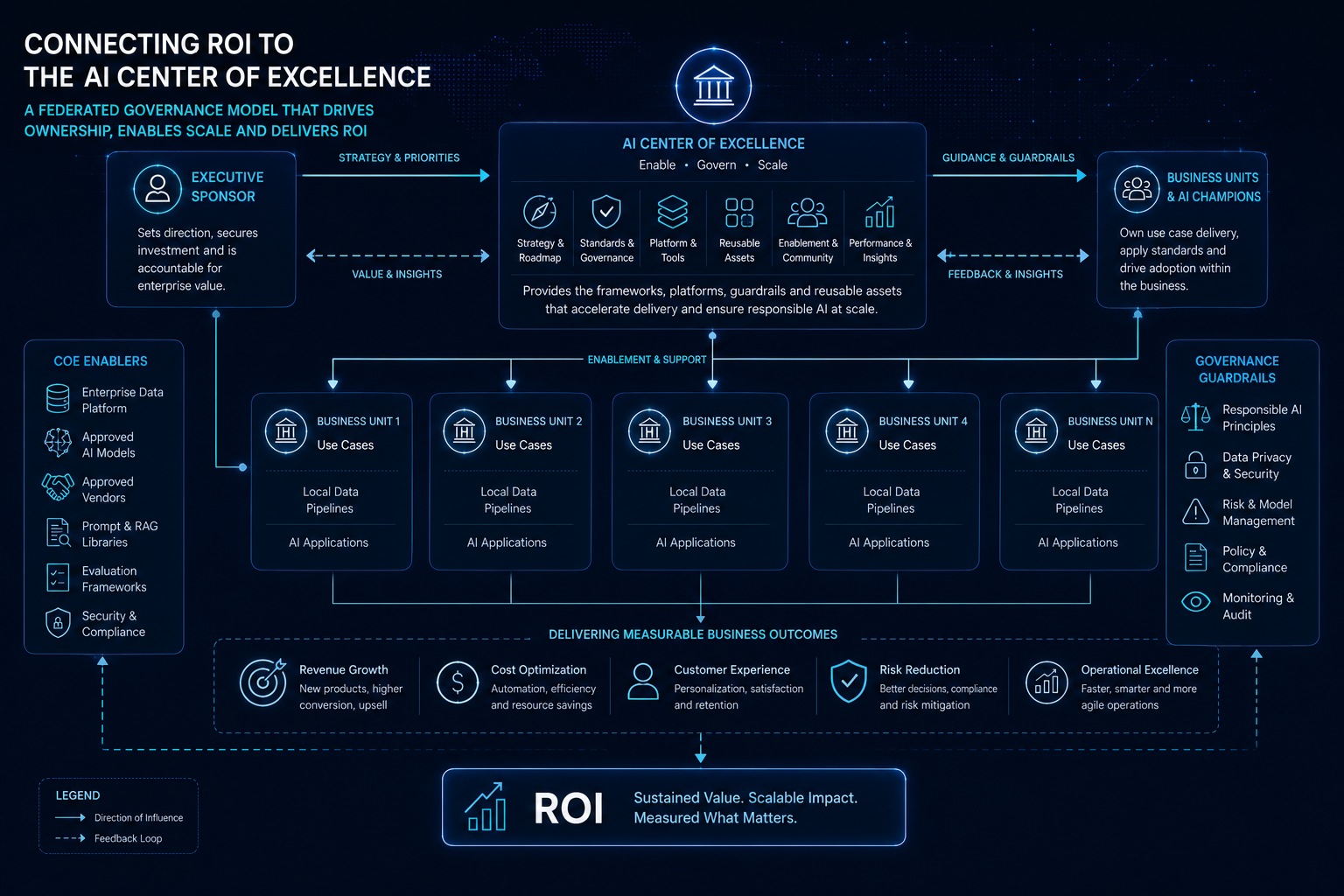
Figure 4. A federated AI Center of Excellence aligns executive sponsorship, governance and business ownership to deliver measurable enterprise value.
An effective AI Center of Excellence already provides the governance needed to measure meaningful business outcomes.
Within the four-pillar operating model discussed previously, accountability naturally sits with the Executive Sponsor responsible for Strategic Alignment.
That individual should own:
- Business objectives
- Investment decisions
- Expected outcomes
- Business value
Executive sponsorship should never be treated as a governance formality.
It is a business responsibility.
The Executive Accountability Checklist
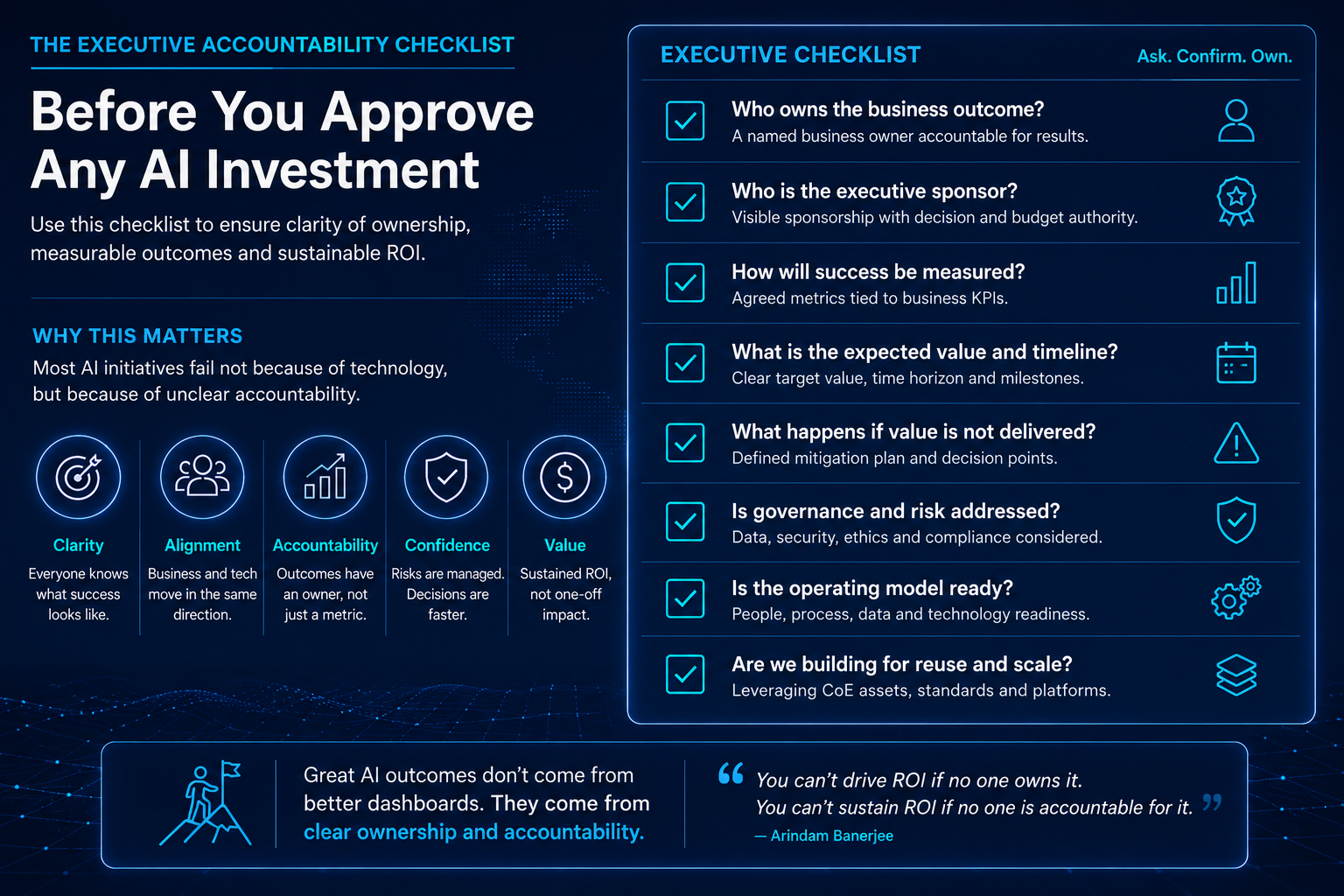
Figure 5. Every AI initiative should answer these questions before funding is approved.
Before approving additional investment in any AI initiative, executive teams should confidently answer the following questions.
- Who owns the business outcome?
- Who is the executive sponsor?
- How will success be measured?
- Which business KPIs will improve?
- What happens if value is not realised?
- Is governance and risk addressed?
- Is the operating model ready?
- Are we building for reuse and scale?
If these questions cannot be answered confidently, the organisation does not have an ROI problem.
It has an ownership problem.
Final Thought
Artificial Intelligence is rapidly becoming part of mainstream enterprise strategy rather than a standalone technology initiative.
As organisations continue investing in AI, measuring value will become increasingly important.
Dashboards, KPIs and financial models all have an essential role to play.
However, they cannot replace one fundamental requirement.
Ownership.
The organisations that consistently realise value from Artificial Intelligence rarely begin by designing better scorecards.
They begin by assigning clear accountability for business outcomes.
Only then does measuring ROI become meaningful.
Technology can measure almost everything.
Leadership still determines who owns the result.
About the Author
Arindam Banerjee is a technology executive with more than 21 years of experience leading enterprise technology transformation, AI strategy, digital transformation and large-scale delivery across global organisations.
His experience spans enterprise architecture, programme delivery, AI operating models and executive technology leadership across banking, manufacturing, consumer products and digital businesses.
He works with organisations to translate AI strategy into practical execution by aligning technology investments with governance, measurable business outcomes and long-term enterprise value.
If you're exploring how to build, govern and measure AI successfully across your organisation, I'd be delighted to connect and exchange ideas.
How does your organisation measure AI success—and more importantly, who is accountable for the outcome?